
A new leasing standard for a European healthcare real estate leader
Aedifica needed a new lease template for its German healthcare portfolio that reflected both the complexity of the asset class and the experience of its own asset and transaction management teams. We developed a new contractual standard from the ground up – legally, structurally and visually.
The client.
Aedifica is a leading European real estate investor specialising in healthcare real estate and senior housing. The listed Belgian real estate company has a portfolio of approximately EUR 12.5 billion across nine European countries. In Germany alone, Aedifica currently manages 160 properties with a total value of more than EUR 2 billion and has many years of investment, transaction and asset management experience in the healthcare real estate sector.
What the matter was about.
A had extensive experience in acquiring, owning and managing healthcare properties, but its lease documentation did not yet fully reflect that experience. Existing leases provided useful starting points, while an existing template prepared by a renowned law firm was legally comprehensive but difficult to use and did not cover a number of positions A wanted to establish as its standard.
Our task was therefore not simply to draft another lease template. Together with A’s CEO and experienced asset and transaction management teams, we worked through the legal, commercial and operational issues that repeatedly arise in healthcare leases and defined A’s preferred position for each of them. In a number of areas, this meant going beyond established market practice and developing new contractual solutions tailored to A’s portfolio and way of working.
At the same time, the new template needed to make this level of sophistication manageable in practice: clearly structured, easy to navigate and visually aligned with A’s corporate identity, without compromising on legal precision.
How we worked
The process, step by step.
-
Initial Review
Review of existing leases and Aedifica’s current leasing practice to identify recurring provisions, gaps and areas for improvement.
-
Stakeholder Questionnaire
Structured questionnaire to capture existing practices, recurring issues, priorities and requirements for the new template.
-
Standards Workshop
Workshop with Aedifica to define what the new template should achieve and establish the key legal, commercial and operational principles.
-
First Draft
Development of the first draft based on the initial review, questionnaire and agreed standards, including a new structure and document design.
-
Questionnaire
Structured feedback on the first draft to identify open points, alternatives and areas requiring further discussion.
-
Refinement Workshop
Detailed discussion of the draft and the remaining legal, commercial and operational issues, including the development of new contractual solutions where existing approaches did not meet Aedifica’s requirements.
-
Draft Refinement & Finalisation
Further development of the template in close alignment with Aedifica and implementation of the agreed positions through to the final version.
-
Schedules & Annexes
Preparation and alignment of the schedules and supporting documents forming part of the new leasing standard.
-
Roll-out & Implementation
Presentation of the final template to Aedifica’s asset and transaction managers, including discussion on its structure, key provisions and practical use.
What changed.
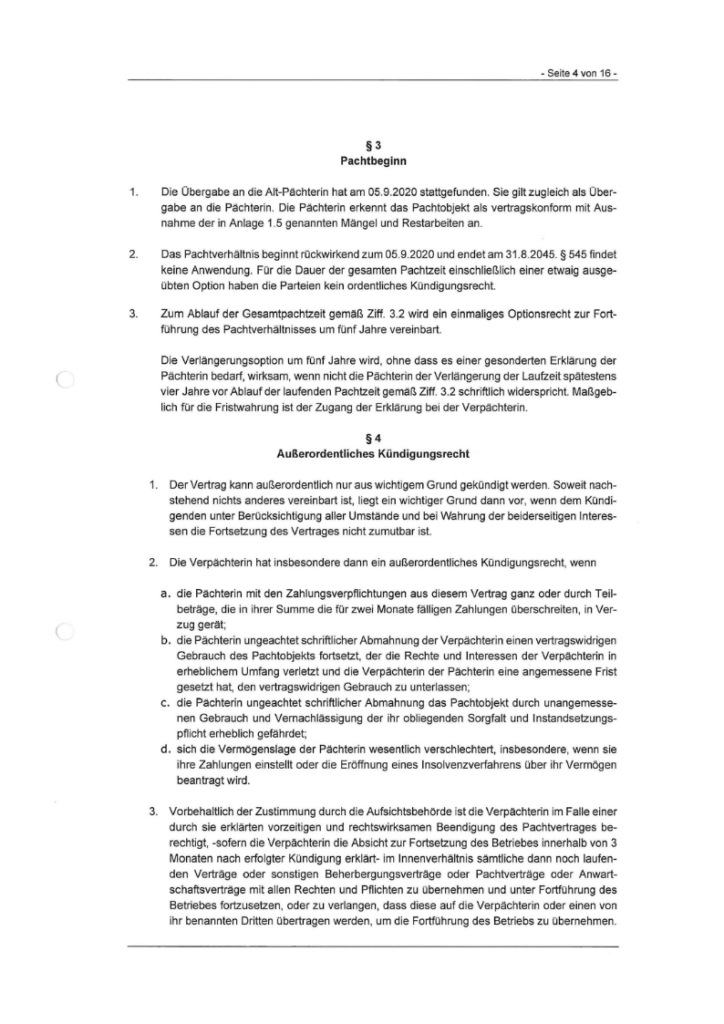
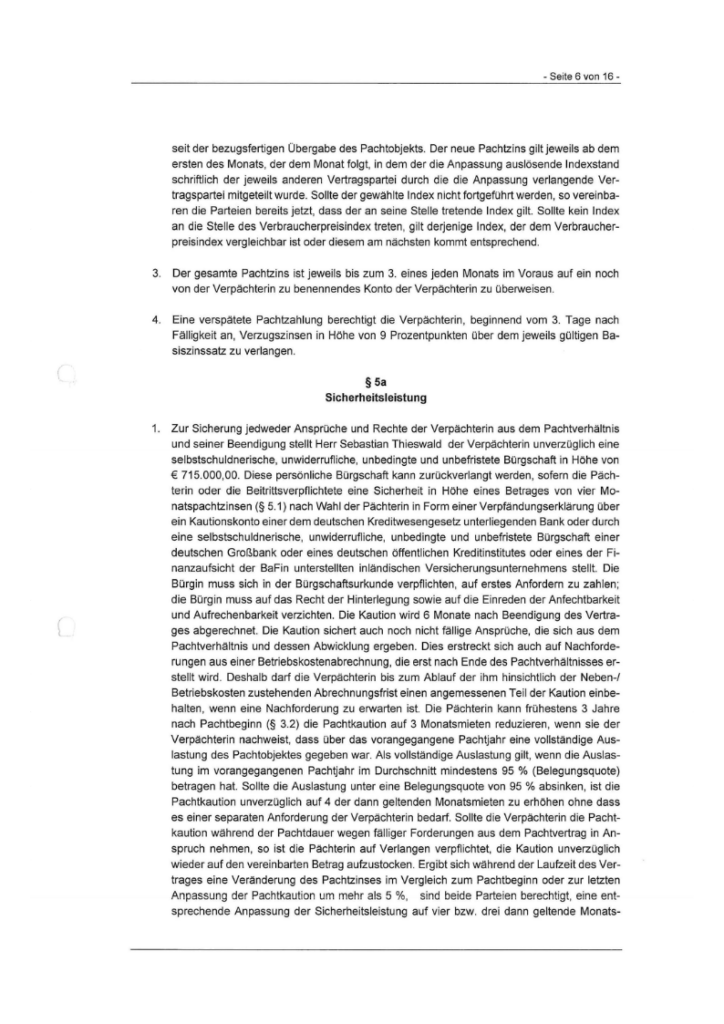
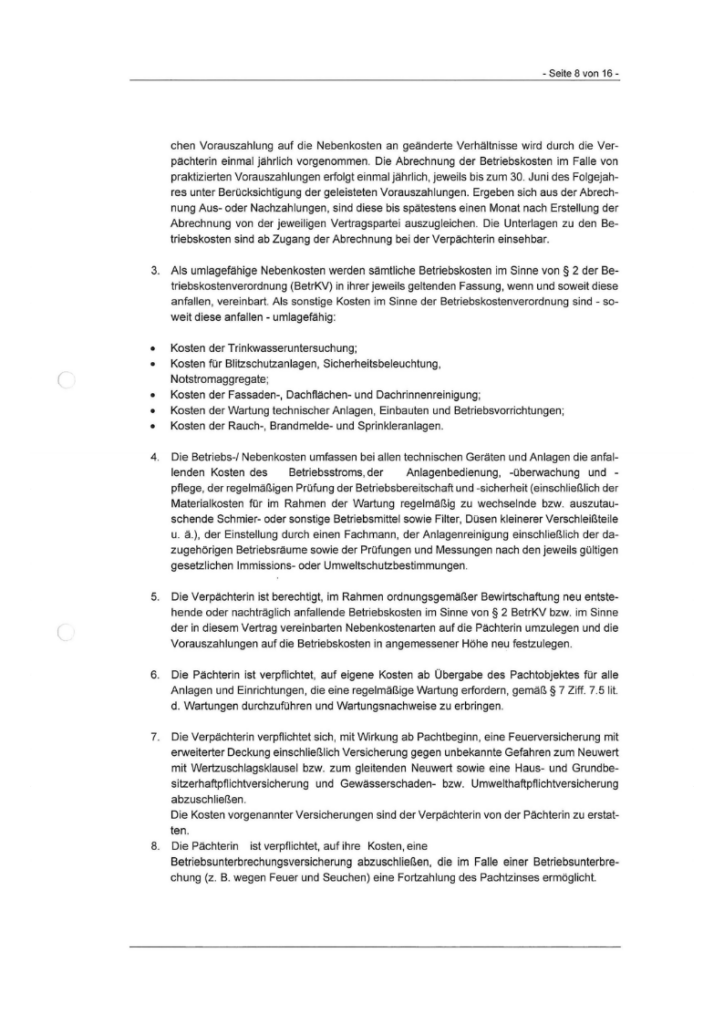
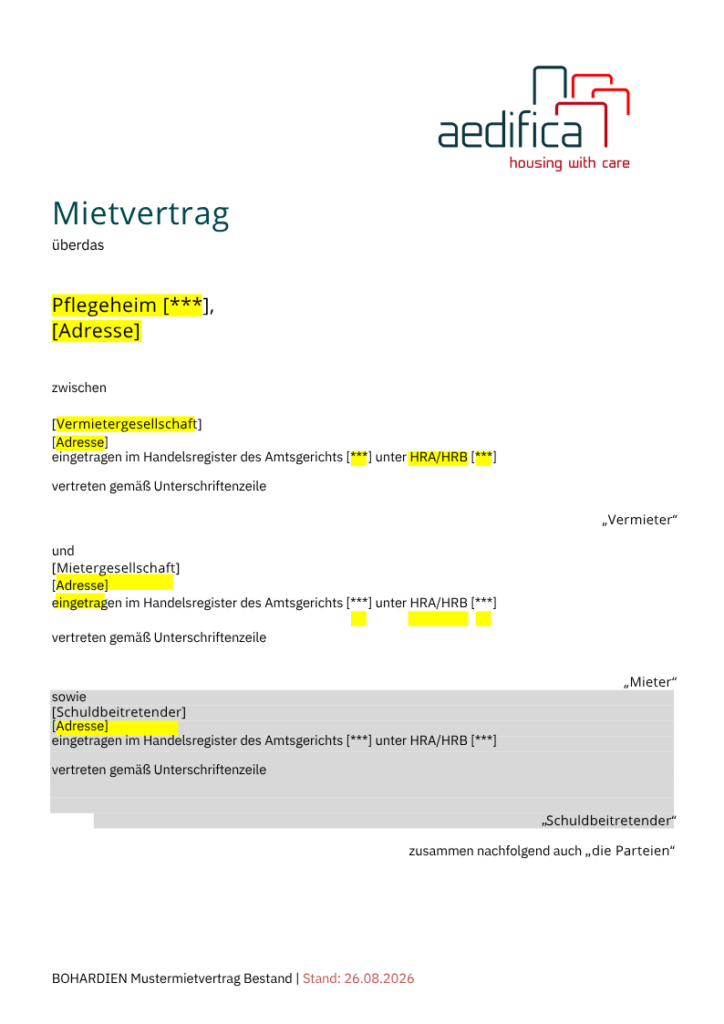
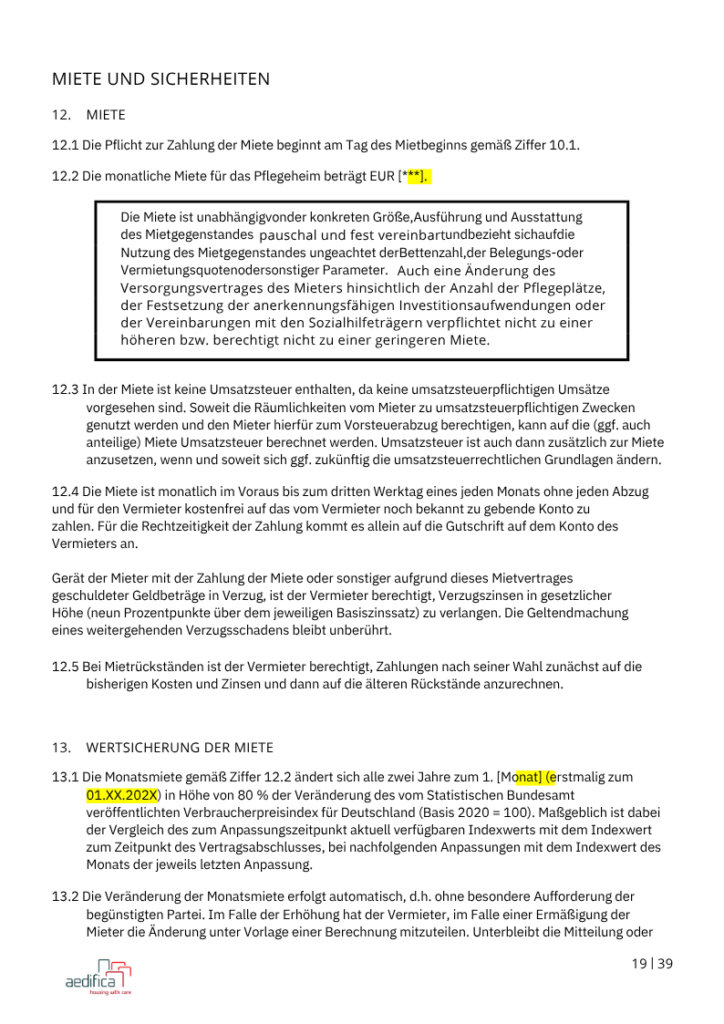
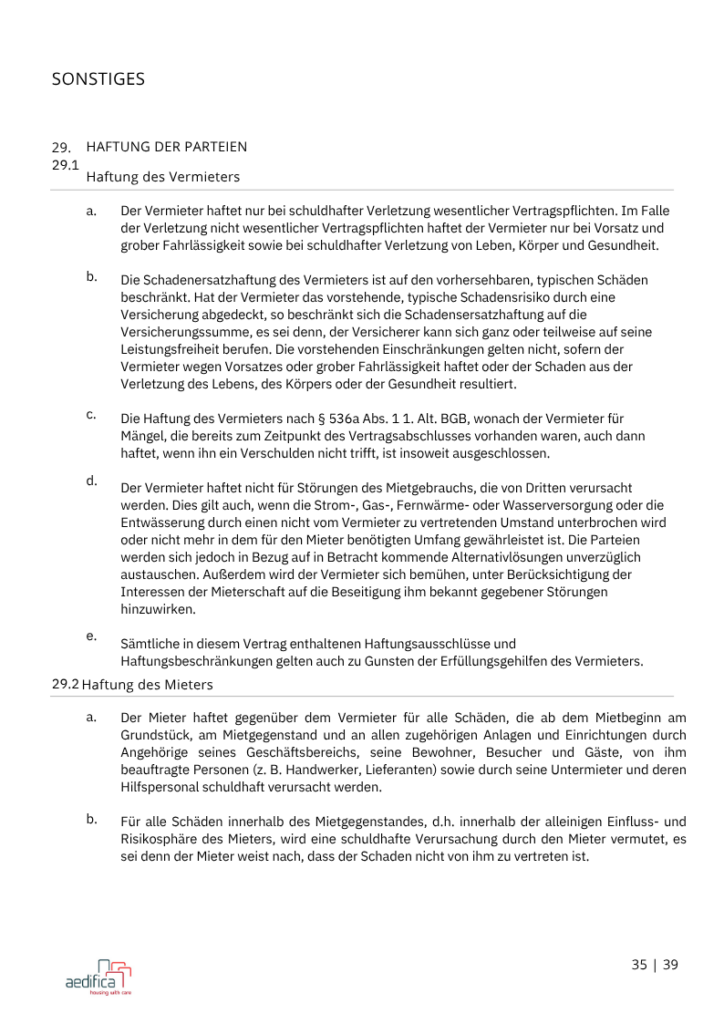
From experience to a defined leasing standard.
In three months, we turned Aedifica’s extensive experience across transactions and asset management into a comprehensive new leasing standard for its German healthcare portfolio. The template brings together Aedifica’s legal, commercial and operational positions in one consistent document – including newly developed contractual solutions for issues where existing market practice did not adequately reflect Aedifica’s requirements.
At the same time, we fundamentally rethought how a sophisticated healthcare lease can work as a document. Clear structure, shorter and more accessible drafting, highlighted guidance and key provisions, and a design aligned with Aedifica’s corporate identity make a complex agreement easier to navigate and use in practice.
The result is more than a new lease template: it is a shared standard for the asset and transaction management teams and a robust basis for future lease negotiations.
FAQ
Questions on this kind of work.
-
When do I need a new lease template?
A new or substantially revised lease template can make sense even if you already have one. Typical triggers include a growing or changing portfolio, recurring issues in negotiations, different contract versions across the business or simply the realization that your existing template no longer reflects how you actually approach deals. A template project is also an opportunity to reassess and define the standards behind the contract..
-
How much standardization makes sense for a professional real estate portfolio?
A good lease template should standardize the positions that matter without trying to make every deal identical. For a professional portfolio, this means defining clear legal, commercial and operational standards while consciously identifying where asset-specific or transaction-specific flexibility is required. The aim is consistency where it adds value – not standardization for its own sake.
-
Who should be involved in developing a lease template?
A lease template should not be developed by lawyers in isolation. The people who acquire, negotiate and manage the properties bring essential practical experience to the process. Depending on the portfolio, this may include transaction and asset management, finance, tax, technical teams and management. Combining these perspectives with legal expertise creates a template that reflects how the business actually operates.
-
How do you make sure a new lease template is actually used consistently?
A good template needs more than internal approval. The people who will use it should understand its structure, the thinking behind the key provisions and where flexibility is intended (and where not). We therefore recommend involving users during development and introducing the final template to the wider team as part of the roll-out. Depending on the organisation, additional guidance or a playbook can help maintain consistency in future negotiations.
Working on something similar?
Tell us what you are working on and where you need support.