
From First Leases to a Defined Leasing Standard
As POHA continued to grow, it needed a clear leasing standard to support future expansion. We helped define the key positions and turn them into a lease template built for growth.
The client.
POHA is a growing co-living operator developing and operating residential concepts across Germany. Its model combines professionally managed living spaces with shared amenities and a strong focus on community.
What the matter was about.
As POHA’s portfolio grew, the company needed a lease template that could serve as a consistent starting point for future locations. As a young business, however, many of the legal, commercial and operational positions behind that template had not yet been defined.
The task was therefore not simply to draft a lease. Together with POHA, we first had to determine what its leasing standard should actually look like, balancing legal protection with operational requirements and the commercial realities of future negotiations.
How we worked
The process, step by step.
-
Existing Lease Review
Review of existing lease agreements and identification of recurring provisions and open issues.
-
Stakeholder Questionnaire
Digital questionnaire to collect legal, commercial and operational requirements from the relevant stakeholders.
-
First Draft
Translation of the initial positions and requirements into a first lease template.
-
Workshop
Discussion and alignment of key contractual positions and open questions.
-
Draft refinement
Incorporation of the workshop results and further development of the template.
-
Review Workshop
Review of the revised draft and final alignment on remaining points.
-
Finalisation
Finalisation of the lease template, including coordination with tax advisors where required.
-
Schedules & Annexes
Development and preparation of the schedules and annexes supporting the final lease template.
What changed.
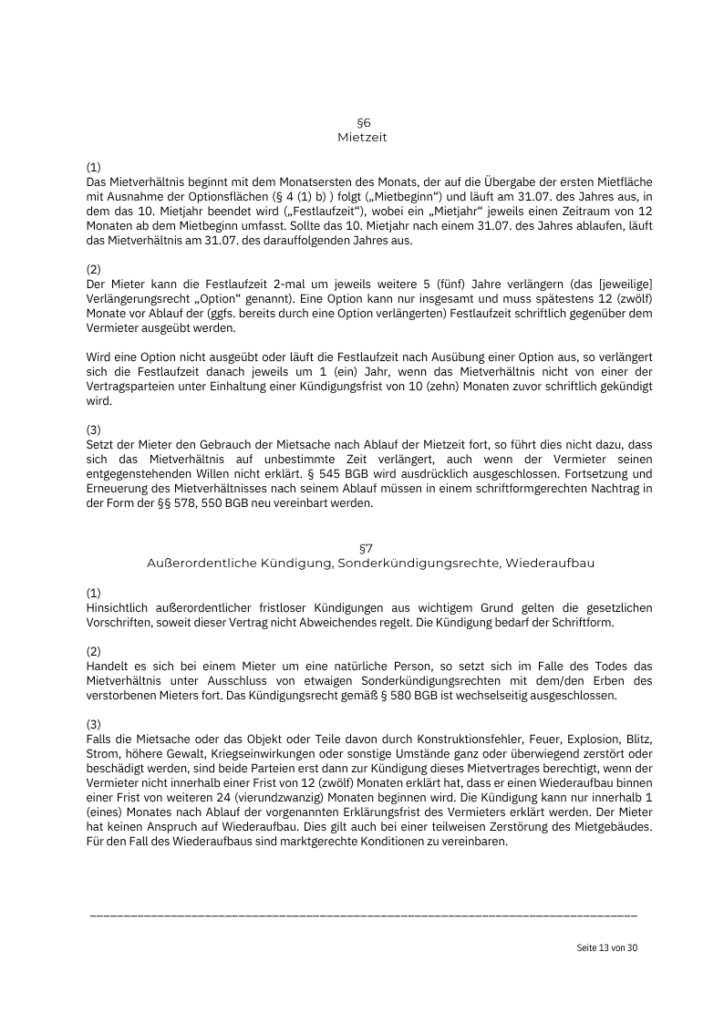
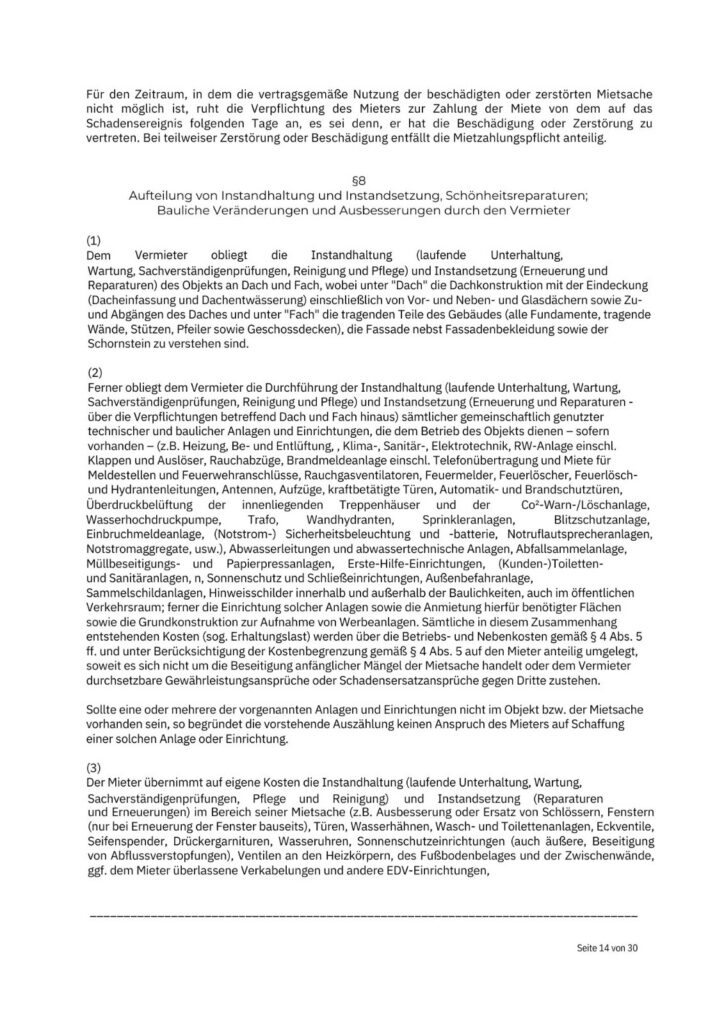
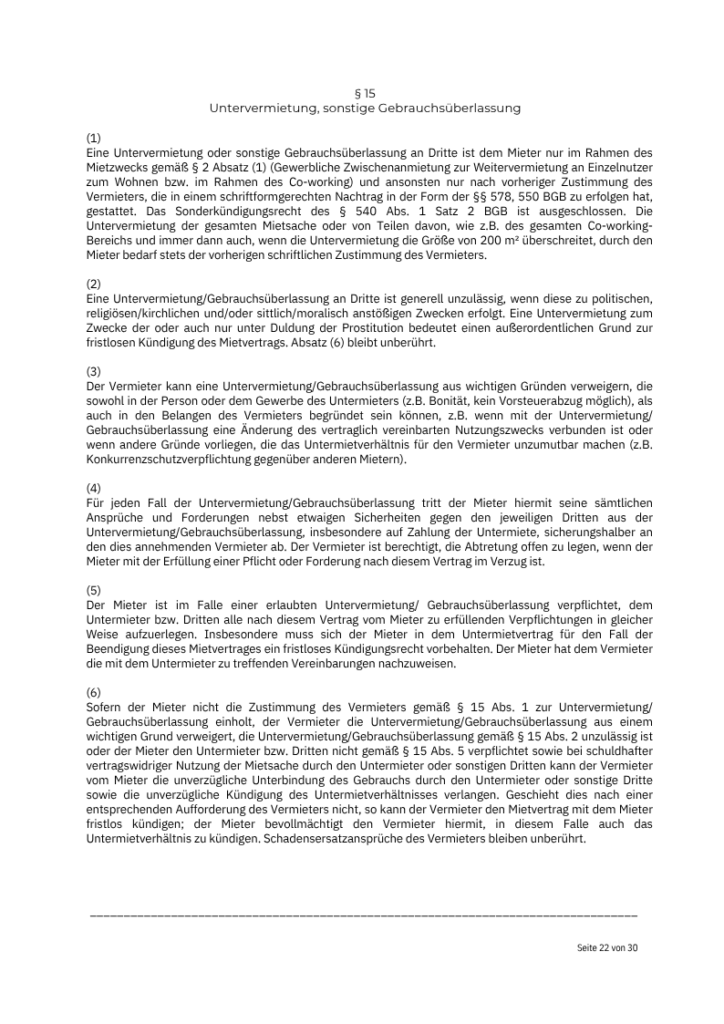
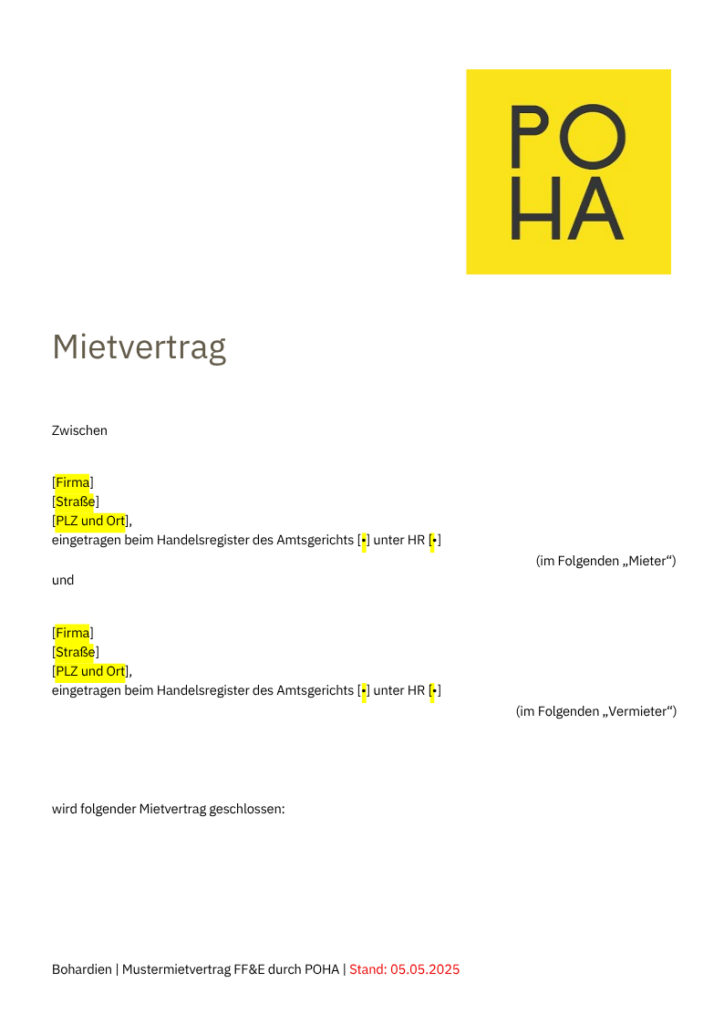
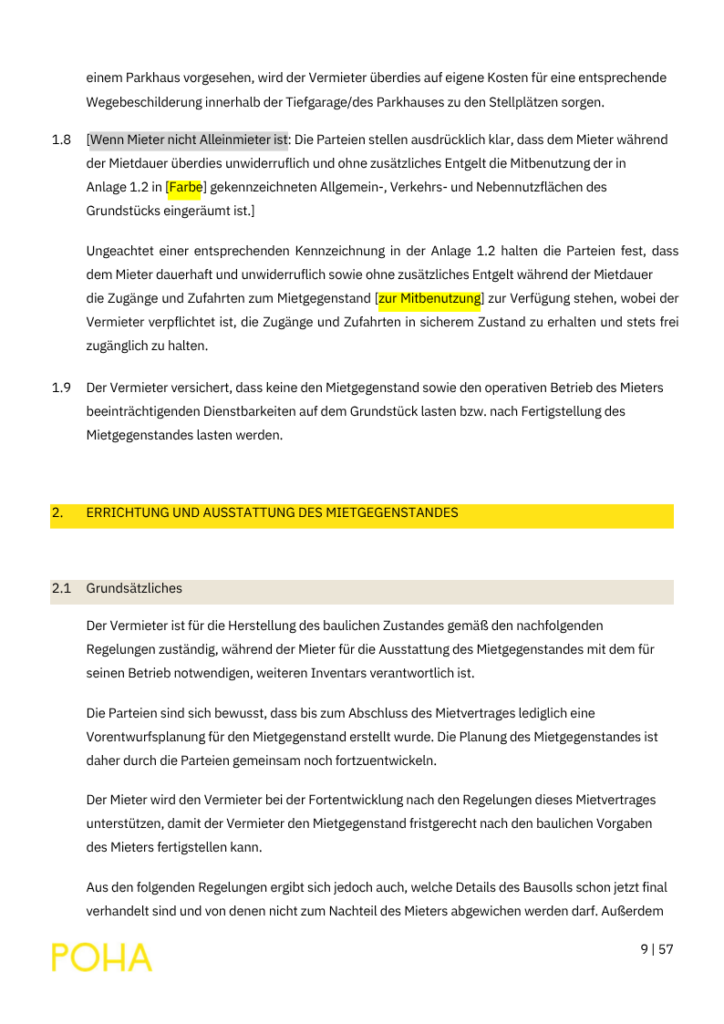
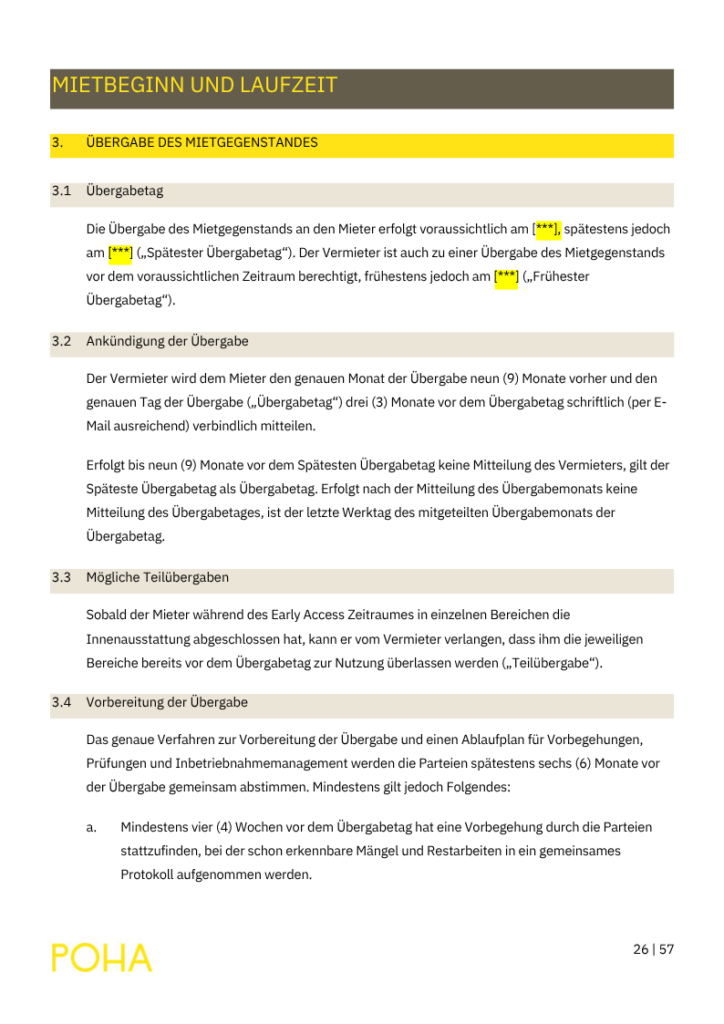
From existing contracts to a new standard.
POHA’s first leases had been negotiated individually and were never intended to define a common standard.
The new template brings the agreed legal, commercial and operational positions together in one consistent document, while reflecting POHA’s brand, language and way of working.
It now provides a clear and consistent starting point for future lease negotiations while retaining the flexibility needed for individual locations and deals.
FAQ
Questions on this kind of work.
-
When do I need a (new) lease template?
Not only when there is no template yet. A new or substantially revised template can also make sense when a business grows, its operational or commercial requirements change, existing contracts no longer reflect its negotiating position, or different versions have developed over time. It is often a good opportunity to assess not just the drafting, but the standards behind it.
-
How long does it take to develop a lease template?
For POHA, the process took around three months from the initial review to the final template. The timeline will depend on the starting point, the number of stakeholders involved and how much internal alignment is required along the way.
-
How much standardization is possible if every property and landlord is different?
A lease template is not meant to eliminate flexibility. It defines the positions that should remain consistent across transactions while leaving room for the specifics of the property, the deal and the negotiation. The key is knowing what should be standard and where flexibility is needed or wanted.
-
Who should be involved in developing a lease template?
A good lease template should reflect more than the legal perspective. Depending on the business, relevant stakeholders may include management, real estate or expansion teams, operations, finance and tax. Bringing these perspectives together early helps create a template that works not only legally, but also in day-to-day business.
Working on something similar?
Tell us what you are working on and where you need support.